Uncategorized
The Everyday Details We Keep

Share:

Share:
What was usually on the kitchen table? Which route did you always take home? What did someone say every time it started to rain?
Questions like these can bring back a scene more readily than “Tell me an important memory.” The familiar things often went unrecorded because, at the time, they were simply life.
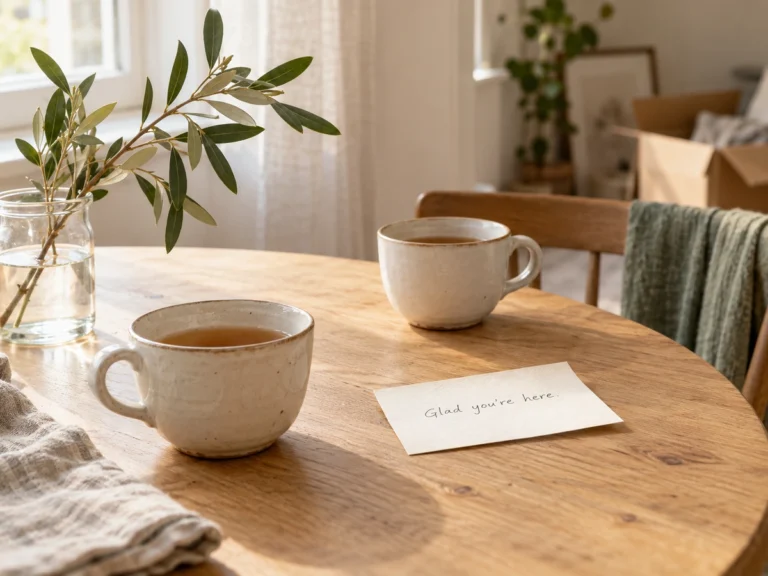
Choose a question that reminds you of a particular person. You could ask it over a cup of tea, send it in a message or answer it in a note of your own.
Stay with whichever detail opens a story. Perhaps the answer is the meal you cooked badly, the bus you kept missing or the shop awning where you waited out a storm.
Write a few lines about that scene. Who was there? What interrupted you? What could you hear? “The table was too small, so your cup usually ended up on the windowsill” gives a memory a place before you have said anything about how it felt.
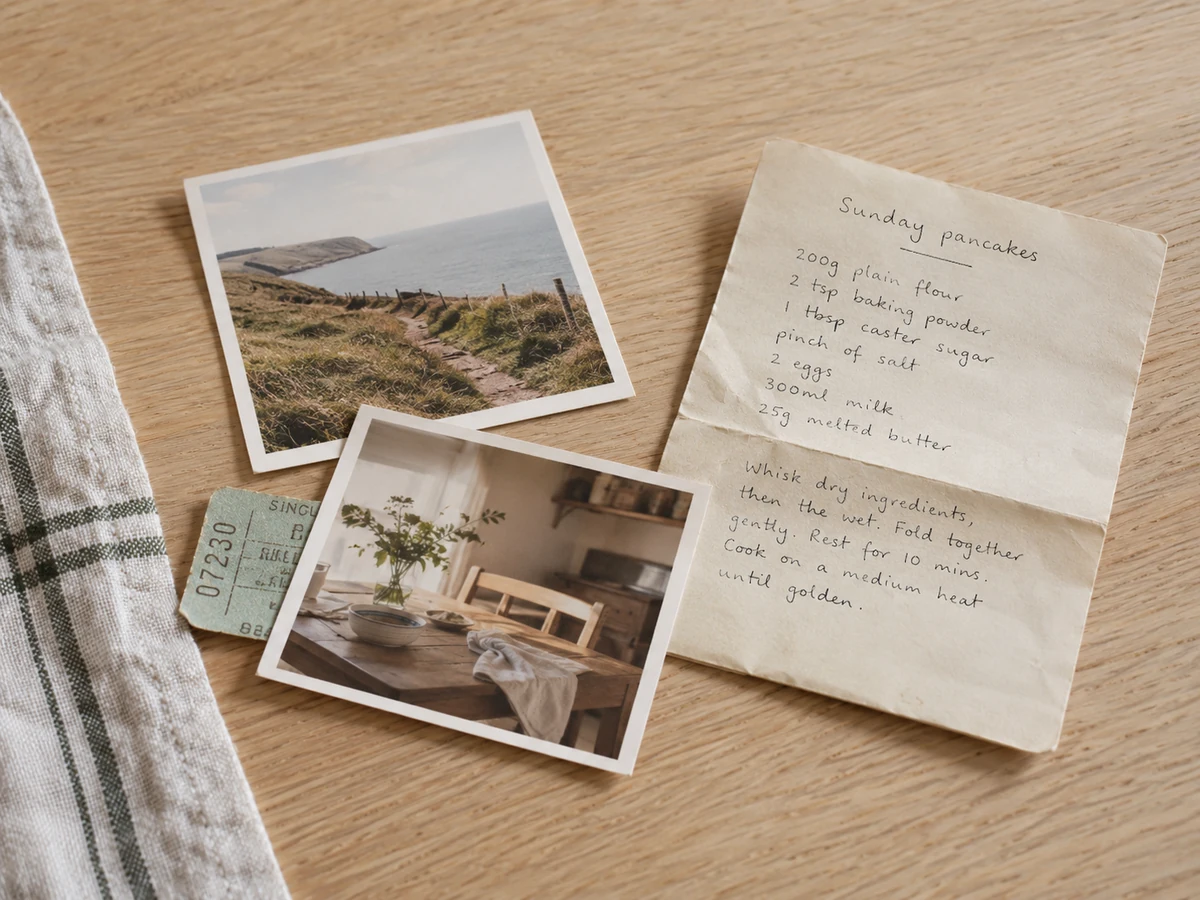
A photograph, a recipe or a ticket can sit beside the words. It need not explain the whole occasion; it can simply remind you of where the story began.
The other person may remember a different part of the afternoon. You recall the rain; they remember the conversation. Both details can stay.
Try beginning with “I remember…” and inviting them to add their version. If you are uncertain about the exact words someone used, say so. An honest recollection can include gaps.
A memory can also become a gift on its own:
“I still think about those sandwiches we ate on the bench after your move. We were exhausted, and I remember how much we laughed.”
Send that sentence, or keep it somewhere you can both return to. It tells the other person that an ordinary day stayed with you. A few sentences may be all the record needs.